Simple Geometric Diamond Zig-Zag Pattern: A Versatile Digital Design Asset for Modern Creative Workflows
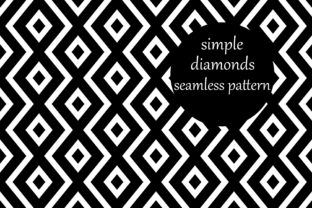
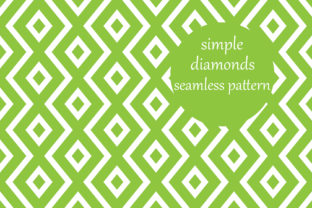
The Simple Geometric Diamond Zig-Zag Pattern is more than a decorative motif—it’s a foundational digital design element engineered for clarity, scalability, and cross-disciplinary utility. Built from precise, repeatable digital shapes—primarily rhombuses arranged in alternating diagonal sequences—it forms a rhythmically balanced, non-repetitive-appearing tessellation. Unlike organic or hand-drawn patterns, this one emerges from algorithmic geometry: each diamond is mathematically aligned at consistent angles (typically 45° and 135°), with uniform stroke weights and spacing. The result is a clean, high-contrast visual structure that conveys motion without clutter and order without rigidity.
How It’s Constructed—and Why That Matters
At its core, the pattern consists of two interlocking rows: one where diamonds point upward and downward in sequence, and another offset to create a continuous zig-zag flow across both horizontal and vertical axes. This isn’t random alternation—it’s a deliberate tiling logic rooted in Euclidean symmetry groups, specifically p2mg (a wallpaper group that includes glide reflections and 180° rotations). Because it’s built using vector-based digital shapes—not raster images or scanned textures—it retains perfect fidelity at any scale: whether rendered at 8 pixels tall on a mobile UI icon or stretched across a 30-foot architectural mural.
This construction has direct functional implications. Designers working in Figma, Adobe Illustrator, or CSS can replicate the pattern using native tools—no plugins required. In code, it translates cleanly into SVG repeating-linear-gradient() declarations with calculated angle offsets. For educators teaching computational art or geometry, the pattern serves as an accessible case study in symmetry, transformation, and discrete mathematics. Its predictability makes it ideal for introducing concepts like translation vectors, rotational invariance, and modular repetition.
Product & Packaging Design
Brands seeking subtle yet distinctive visual identity elements increasingly adopt geometric patterns like the Simple Geometric Diamond Zig-Zag Pattern for secondary packaging, label backgrounds, and unboxing experiences. A skincare startup might use a soft lavender-and-charcoal variant on matte-finish boxes—conveying precision and calm without overt branding. Beverage companies apply scaled-down versions as embossed foil textures on aluminum cans, where the angular geometry catches light dynamically as the container rotates in hand. Because the pattern lacks cultural or temporal associations (unlike florals or Art Deco motifs), it avoids dating quickly—a strategic advantage for products with multi-year lifecycles.
Digital Interfaces & Web Development
In UI/UX contexts, the pattern functions effectively as a low-saturation background layer behind cards, modals, or data dashboards. Its directional flow subtly guides the eye left-to-right or top-to-bottom—supporting natural reading patterns without competing with content. Developers integrate it via inline SVG sprites or CSS custom properties, enabling runtime color switching (e.g., dark mode adaptation) without loading additional assets. One fintech platform uses a monochrome version as a subtle grid overlay beneath transaction timelines, helping users parse chronological sequences while maintaining visual breathing room.
Educational Materials & Visual Learning Tools
Teachers and instructional designers leverage the pattern’s inherent structure to scaffold learning. In elementary math units on angles and polygons, students annotate printed sheets to identify acute/obtuse angles within each diamond or calculate interior angle sums. In middle school coding classes, learners recreate the pattern using block-based programming (e.g., Scratch) or Python’s Turtle graphics—practicing loops, coordinate systems, and conditional logic. Its visual consistency reduces cognitive load, letting learners focus on underlying concepts rather than decoding irregular forms.
Textile & Surface Design
Unlike many digital-first patterns that falter in physical production, this one translates exceptionally well to fabric printing, ceramic decals, and laser-cut wood veneers. The sharp edges and uniform spacing prevent bleeding or misregistration during screen printing or sublimation. A textile studio recently licensed a navy-and-cream variant for limited-run upholstery fabrics—the zig-zag rhythm creates tactile interest under grazing light while remaining neutral enough for commercial interiors. Similarly, architects specify the pattern as a parametric cladding motif, where aluminum panels are CNC-milled with recessed diamond grooves, turning structural surfaces into responsive light-capturing systems.
Advantages Over Alternatives
Compared to other geometric repeats—such as chevrons, herringbones, or hexagonal grids—the Simple Geometric Diamond Zig-Zag Pattern offers distinct advantages:
- Directional neutrality: While chevrons strongly imply forward motion and herringbones suggest hierarchy or division, the diamond zig-zag balances dynamism with equilibrium. Its bidirectional flow works equally well in left-to-right and right-to-left language interfaces.
- Scalability without distortion: Unlike bitmap-based patterns, which pixelate or blur when enlarged, this vector-native structure maintains crispness at any resolution—critical for responsive web design and print-on-demand services.
- Color adaptability: With only two shape elements (the diamond outline and negative space), it supports dramatic tonal shifts—from high-contrast black-on-white to near-monochrome gradients—without losing legibility or structural integrity.
- Low visual competition: Its rhythmic regularity creates ambient texture rather than focal dominance, making it ideal for layered compositions where typography, photography, or data visualizations must remain primary.
Practical Considerations for Implementation
Adopting the pattern successfully requires attention to context-specific constraints. In accessibility-focused projects, contrast ratios between foreground and background elements must meet WCAG 2.1 AA standards—particularly when text overlays the pattern. A light gray diamond on off-white may pass contrast checks at large sizes but fail when reduced to small interface elements. Testing with browser-based contrast analyzers or automated Lighthouse audits is recommended.
For print applications, bleed and trim zones demand careful alignment. Because the pattern repeats infinitely, designers must ensure tile boundaries align precisely with physical sheet dimensions to avoid visible seams. Many professional print houses request pattern files with 3 mm bleed and embedded crop marks—details easily managed in vector editors but often overlooked in rapid prototyping.
When integrating into brand systems, consider semantic alignment. A law firm might select a deep indigo-and-slate variant to evoke authority and stability, whereas a children’s educational app may opt for rounded-corner diamonds in primary colors—softening geometry without sacrificing structural clarity. The base pattern remains unchanged; only its expressive parameters shift.
Color Flexibility as a Strategic Asset
The phrase “a simple geometric pattern made of digital shapes. This could be used for a whole variety of different projects and is available in other color options” reflects more than aesthetic convenience—it signals intentional design extensibility. Each color variant isn’t merely a recolor but a recalibration of emotional resonance and functional performance. Warm palettes (terracotta, ochre, burnt sienna) enhance approachability in hospitality or wellness contexts. Cool triads (cobalt, slate, ice blue) reinforce technical credibility in engineering or SaaS environments. Even grayscale variants serve specialized roles: a 10% black diamond on white provides just enough visual anchoring for long-scroll web pages without inducing fatigue.
Importantly, color variation doesn’t compromise interoperability. All variants share identical spatial proportions and alignment logic—meaning a designer can switch from a coral-and-cream version to charcoal-and-ivory mid-project without adjusting layout grids, spacing systems, or development handoff specs. This consistency accelerates iteration and reduces cross-functional friction between design, engineering, and production teams.
Emerging Trends and Future Adaptability
As generative design tools mature, the Simple Geometric Diamond Zig-Zag Pattern is evolving beyond static application. Designers now feed its base parameters into AI-assisted tools to produce adaptive variants—slightly perturbed angles for organic feel, variable diamond densities for data-driven visualizations, or kinetic iterations where the zig-zag “travels” along a path in micro-interactions. In AR experiences, the pattern anchors spatial markers: when viewed through a mobile device, diamonds expand into 3D extrusions aligned with real-world surfaces, transforming flat walls into interactive canvases.
Its longevity stems from foundational strength—not trend dependency. While maximalist gradients and chaotic layouts cycle in and out of fashion, this pattern endures because it answers enduring human needs: for order that feels alive, for structure that invites exploration, and for simplicity that carries depth. Whether rendered in ink on paper, etched into steel, or animated in WebGL, it remains legible, functional, and quietly authoritative.
Why It Resonates Across Audiences
Professionals appreciate its precision and integration readiness. Consumers respond to its quiet confidence—neither loud nor anonymous. Creators value its remix potential. Educators rely on its teachability. Researchers cite its reproducibility in controlled studies. Hobbyists enjoy its low barrier to entry. Business owners recognize its ROI: one asset, dozens of validated applications, zero licensing friction. That breadth isn’t accidental. It’s the outcome of designing not for a single use case—but for the full spectrum of how humans make, communicate, learn, and inhabit space.