Why the Simple Geometric Square Tiles Pattern Is Reshaping Visual Design Across Industries
In an era defined by digital saturation, cognitive overload, and rapidly shifting aesthetic expectations, designers, marketers, and product teams are turning not to complexity—but to clarity. At the heart of this quiet shift is a deceptively modest asset: the Simple Geometric Square Tiles Pattern. More than just a background or decorative element, it represents a deliberate convergence of usability, scalability, and visual intentionality—a digital shape language built for today’s workflows and tomorrow’s platforms.
A Foundation Built on Precision, Not Ornament
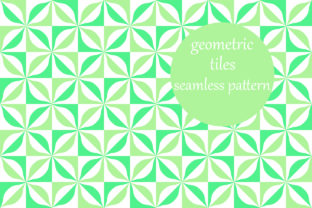
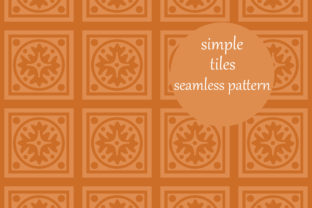
The Simple Geometric Square Tiles Pattern is exactly what its name suggests: a seamless, repeatable arrangement of uniform squares—digitally constructed, mathematically consistent, and intentionally minimal. Unlike organic textures or illustrative motifs, it relies on clean edges, predictable spacing, and absolute geometric fidelity. Each tile is a self-contained unit that aligns flawlessly across resolutions, orientations, and devices. It’s not “designed” in the traditional sense of expressive flourishes—it’s engineered for function-first integration.
This precision makes it uniquely adaptable. Whether applied as a subtle backdrop for a SaaS dashboard, a structural grid for a responsive landing page, or a tactile layer beneath branded typography in a pitch deck, the pattern reinforces hierarchy without competing for attention. Its neutrality is strategic—not empty, but purposefully open-ended.
Aligning With Macro Trends in Digital Experience
Three converging forces make the Simple Geometric Square Tiles Pattern especially timely:
- Design Systems Maturation: Organizations no longer treat UI elements as one-off assets. They demand modular, reusable components with predictable behavior. A square tile pattern functions like a “visual CSS variable”—consistent, versionable, and interoperable across Figma libraries, React component kits, and design token sets.
- Accessibility-First Prioritization: As WCAG 2.2 adoption accelerates and inclusive design becomes non-negotiable, high-contrast, low-distraction backgrounds gain value. The pattern’s even tonal distribution and lack of visual noise support focus, reduce eye strain, and enhance legibility—especially when layered under text or interactive elements.
- AI-Augmented Creative Workflows: Generative tools now interpret prompts like “clean, scalable, neutral grid background” with increasing accuracy—but only if training data includes well-documented, semantically clear assets. Patterns like the Simple Geometric Square Tiles Pattern serve as reliable anchors in prompt engineering, helping AI outputs remain coherent, production-ready, and brand-aligned.
These aren’t niche concerns. They reflect how professionals—from freelance UX designers building client dashboards to growth marketers optimizing conversion paths—are redefining quality: not as “visually impressive,” but as “operationally sustainable.”
Why Professionals Are Choosing Simplicity Over Simulation
Consider two real-world scenarios:
- A fintech startup launching its investor portal needed a background that conveyed stability, transparency, and precision—without evoking coldness or sterility. Instead of defaulting to gradients or abstract illustrations (which risked misinterpretation or slow load times), the team applied a light-gray Simple Geometric Square Tiles Pattern at 5% opacity beneath data cards. The result? A subtle rhythm that grounded content, improved scannability, and passed contrast audits effortlessly—all while reducing file size by 73% compared to a raster-based alternative.
- A global education NGO redesigning its multilingual learning platform faced inconsistent layout behavior across 14 languages—including right-to-left scripts and variable line heights. By anchoring its card-based interface to a responsive square grid (derived from the same underlying pattern logic), developers ensured consistent spacing, alignment, and touch-target sizing regardless of text expansion—cutting QA time by nearly half.
What unites these cases isn’t aesthetics alone—it’s architectural thinking. The Simple Geometric Square Tiles Pattern supports decisions rooted in systems, not snapshots. It scales horizontally (across screen sizes), vertically (across teams), and temporally (across product iterations).
Beyond Backgrounds: Functional Roles in Modern Projects
While often deployed as a surface-level texture, the pattern’s utility extends into structural and experiential layers:
- Layout scaffolding: Used as an overlay in design tools, it guides consistent padding, margin, and column alignment—acting as a silent collaborator between designers and developers.
- Data visualization grounding: When overlaid beneath bar charts or heatmaps at low opacity, it adds spatial context without interfering with data interpretation—particularly effective in dark-mode interfaces where depth cues are limited.
- Brand extension tool: Because it’s available in other color options—including accessible contrast pairs (e.g., charcoal-on-ivory, navy-on-sand, slate-on-mint), it allows brands to express tone through restraint. A wellness app might use soft sage tiles; an enterprise security platform, deep indigo. The shape stays constant—the meaning shifts with intent.
This versatility reflects a broader industry evolution: the move from “design as decoration” to “design as infrastructure.” Every pixel serves a role—not just in how something looks, but in how reliably it performs, how easily it’s maintained, and how inclusively it’s experienced.
Meeting Changing Expectations—Without Chasing Trends
Users today don’t reward novelty for its own sake. They reward consistency, speed, and respect for their attention. Likewise, professionals no longer optimize for “what looks good in a Dribbble shot”—they optimize for “what ships faster, tests better, and scales without rework.”
The Simple Geometric Square Tiles Pattern meets both audiences where they are:
- For entrepreneurs and solopreneurs, it reduces dependency on custom design resources—offering professional-grade structure out of the box.
- For enterprise teams, it integrates natively into existing design system documentation, supporting automated handoff and cross-platform theming.
- For marketers, it ensures campaign assets retain coherence across email, social, and web—no manual resizing or style reconciliation required.
- For freelancers, it serves as a trusted, reusable foundation—freeing mental bandwidth for higher-value strategy rather than repetitive layout decisions.
Crucially, it does all this without requiring new tools, plugins, or learning curves. It works in CSS, SVG, Figma, Adobe XD, and even PowerPoint—because its strength lies in universality, not exclusivity.
Looking Ahead: Simplicity as Strategic Advantage
As ambient computing expands—from foldable displays to AR overlays—the need for resilient, resolution-agnostic visual foundations will only intensify. Patterns built on rigid geometry, rather than fluid illustration, offer inherent advantages: predictable tiling at any scale, effortless adaptation to dynamic aspect ratios, and compatibility with vector-first rendering pipelines.
That’s why forward-looking teams aren’t treating the Simple Geometric Square Tiles Pattern as a “trend” to adopt or discard—but as a baseline capability. Like semantic HTML or accessible color contrast ratios, it’s becoming part of the shared technical and aesthetic vocabulary of digital creation.
Its availability in other color options further underscores this shift: customization isn’t about personalization for its own sake, but about contextual alignment—ensuring every implementation serves a specific functional or emotional objective, grounded in evidence, not assumption.
In short, the rise of the Simple Geometric Square Tiles Pattern signals something deeper: a collective recalibration toward intention over ornament, sustainability over spectacle, and clarity over cleverness. It doesn’t shout. It structures. It enables. And in doing so, it quietly empowers professionals to build—not just prettier things, but better ones.